Reviews

Contemporary Dragon Ladies

China historian Gina Tam on Women and Power by Mary Beard

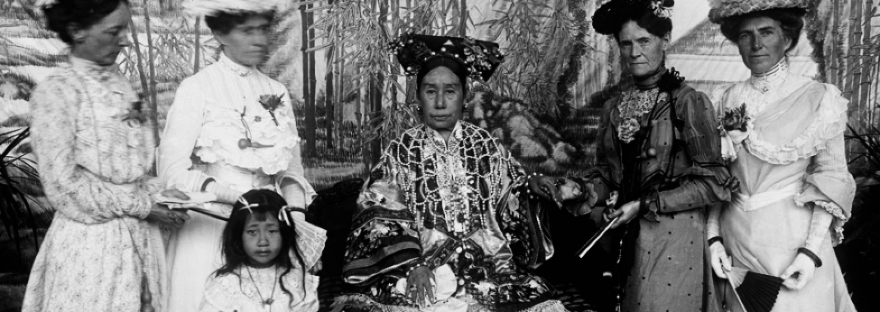
The first woman to ever have been told to “shut up,” according to Mary Beard’s sharp manifesto Women and Power, was Odysseus’s wife Penelope. Upon recognizing that her son Telemachus was entertaining a group of unwelcome visitors, she intervenes, only to be told to return to her proper place. “Mother,” he tells her, “go back up into your quarters and take up your own work… speech will be the business of men.” For Beard, this is the beginning of an uncomfortable, long history of telling women to hold their tongues and take their place outside the inner circles of power – from Telemachus to the male CEOs of today’s board rooms, from the Amazonians to Theresa May, “notions of power that exclude women,” have been strikingly durable across space and time.
Reviews

Sounding the Alarm in Hong Kong

Susan Blumberg-Kason reviews Candace Chong’s play Wild Boar

The Hong Kong playwright Candace Chong Mui-Ngam worked with David Henry Hwang to translate Hwang’s award-winning play Chinglish, which premiered in Chicago in 2011. Chinglish, a story of cross-cultural American-Chinese relations in a business and personal context, went on to take Broadway by storm. Chong herself is one of Hong Kong’s most renowned playwrights and recently collaborated again with Hwang – for another Chicago premier – but this time on a play Chong wrote. Wild Boar debuted in Cantonese in Hong Kong back in 2012 and has recently been performed in English by Chicago’s Silk Road Rising theater company, with Joanna C. Lee and Ken Smith translating the play into English and Hwang adapting it for an American audience.

Reviews

Dirty Rotten Scoundrels

Rob Moore reviews The Book of Swindles by Zhang Yingyu

"These moral degenerates are extremely crafty, so the gentleman needs to make his defenses airtight."

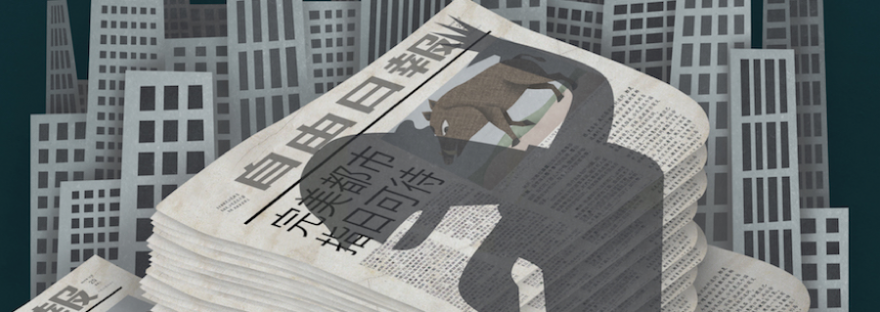
So goes the commentary appended to ‘Stealing Silk with a Decoy Horse,’ the first tale in Christopher Rea and Bruce Rusk's abridged translation of The Book of Swindles, a Ming dynasty collection originally penned by Zhang Yingyu. Like with any good heist story, ‘Stealing Silk’ allows the "gentleman" reader to straddle both sides of the line, disapproving of the obviously unethical actions of the swindler while at the same time waiting with bated breath to see just how the swindle came off. Zhang's solemn pronouncement is made with a nudge and a wink, since the success of the collection upon its publication in 1617 demonstrates that the author knew too well that the only thing better than alerting the reader to nefarious criminals is to let them in on the crime.

Reviews

The Woman Who Built an Empire

Jeremiah Jenne reviews Alice Poon's novel  The Green Phoenix

The Qing imperial palaces were never easy places to be a woman. You were ranked and your rankings determined your level of comfort and security. The surest way to move up the rankings was to attract the continued favor of the emperor or, at the very least, bear him a son. Should that son someday take the throne, then you, as the Empress Dowager, could finally enjoy some power and prestige, not the least because the Qing emperors were, by and large, mamas’ boys.

Reviews

Hong Kong on the Brain

Christopher Rea reviews Hon Lai-chu’s The Kite Family

‘Spoiled Brains,’ the first story in Hong Lai-chu’s collection The Kite Family, expertly translated by Andrea Lingenfelter, reminds me of Wong Kar-wai’s 1994 film, Chungking Express. When I taught a course on the history of Chinese cinema in Vancouver last spring, students voted Chungking Express their favorite film. In one of its iconic sequences, a cop commemorates his lost love by buying and consuming tins of pineapple stamped with a date that has already passed. He hopes that she’ll return before his 25th birthday, but she doesn’t, and he gorges on rancid fruit, only to throw it up again. “When,” he muses in a voiceover, “did everything start having an expiration date?”