Essays

The Death of China’s Reform Era

Matt Schiavenza reviews End of an Era by Carl Minzner

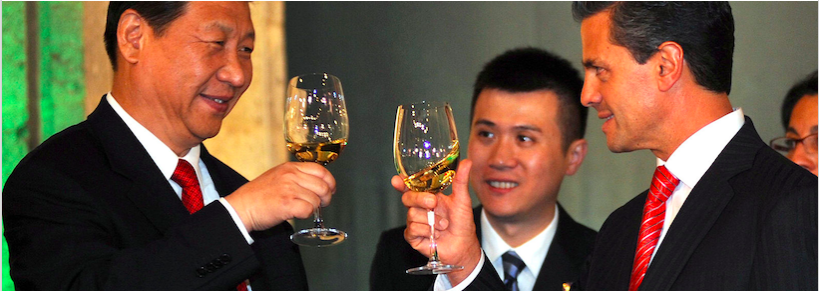
In terms of shock value, the announcement on Sunday 25 February that China would abolish term limits for its president and vice president – thus setting the stage for Xi Jinping to rule indefinitely – registers several notches below Donald Trump’s victory in the 2016 US presidential election. China’s presidency, after all, is only Xi’s third-most important position, ranking below his chairmanship of the Chinese Communist Party and leadership of the country’s Central Military Commission – neither of which have ever been bound by term limits. Sinologists have referred to Xi as China’s most powerful leader since Mao Zedong since the early days of his presidency, a status only solidified when Xi neglected to anoint a successor at last October’s 19th Party Congress. Removing presidential term limits is, itself, a move of little consequence, acknowledging changes that seem to have already taken place.

But that doesn’t mean it isn’t significant. Now is as good a time as any to declare that the most recent period of Chinese history, one that replaced Maoism with Deng Xiaoping’s nascent market reforms in 1978, has come to an end. A new period – one some observers have dubbed “the Xi era” – has begun.

Essays

All Quiet on the Campus Front

Contrasting student action in the 1910s and 80s with silence in the 2010s – Jeffrey Wasserstrom

When news broke that Xi Jinping would not be limited to serving just two terms as President, while some commentators turned to international ruler-for-life comparisons, others looked to China’s past for illuminating parallels and contrasts. As someone who began his career studying student-led activism and remains interested in the subject, I was struck immediately by references to two decades that figure centrally in the history of that topic: the 1910s and the 1980s. The former was the decade of the May 4th movement, which took its name from the date in 1919 when a rowdy student protest took place in the heart of Beijing, triggering a struggle that reached its peak with a general strike that shut down the city of Shanghai. The 1980s witnessed the massive 1989 gatherings in Tiananmen Square that preceded the June 4th massacre.

1919 and 1989 were not, moreover, the only years in the second and second to last decades of the twentieth century when campus activism mattered. The May 4th movement was preceded by and built on the foundation laid during a 1918 protest wave, while the Tiananmen protests also had a dress rehearsal in the 1986-87 struggles, whose biggest marches took place in Shanghai.

Essays

The Coldest Winter in Hong Kong

The geopolitics of a film banned – Aaron Mc Nicholas

In early 1981, a virulent anti-communist film produced in Kuomintang-controlled Taiwan passed inspection by Hong Kong’s film censors for public screenings in the city. In reaching their decision, the censors reasoned that the film covered the Cultural Revolution, which was an historical episode “now condemned as much in China as elsewhere” and the film avoided direct criticism of past or present Chinese leaders. Therefore, there were not sufficient grounds to block the film being shown in Hong Kong.

Such a decision would have been unthinkable for much of Hong Kong’s colonial history. As much as the current generation of Hong Kongers discusses the effect of measures such as the National Anthem Law on freedom of expression, the city’s creative space has never been able to escape geopolitical constraints when it comes to sensitive topics. And there was no doubt that The Coldest Winter in Peking was a piece of political propaganda, produced by Taiwan’s government-run film studio with the aim of painting an unflattering picture of life on the mainland under the Communist bandits.

Essays

No More Hiding

A Chinese New Year’s lesson on embracing your identity – Jennifer Duann Fultz

You would think it would be hard to forget that I’m not white. I’m a Chinese-American woman, born, raised and educated in the Midwest. I was one of maybe a dozen Asian students in my high school graduating class of 400. I didn’t have a single Asian(-American) teacher until I was in college, and then they were all Chinese language instructors. My Master of Education program had exactly three students of color and I was, of course, the only Asian.

Essays

The Thrill of a Stranger

Kassy Lee unpicks Xiao Shui’s poetry in Stories from Bohai Sea

In the West, we’re taught that Chinese people value their family and their familial relationships above all else. Confucian values are supposed to impose order on society: son obeys father, wife obeys husband, and everyone obeys the emperor. Unlike the individualism of the West, Chinese society is built on filial piety, or so the story goes. After years of social upheaval, however, how are Chinese families coming to terms with domestic migration? One answer can be found in the work of contemporary poet Xiao Shui.