2020 China Books

2020 China Books (Part 2): Shanghai and Borderlands

A second list of new China history books not to miss – compiled by Brian Spivey

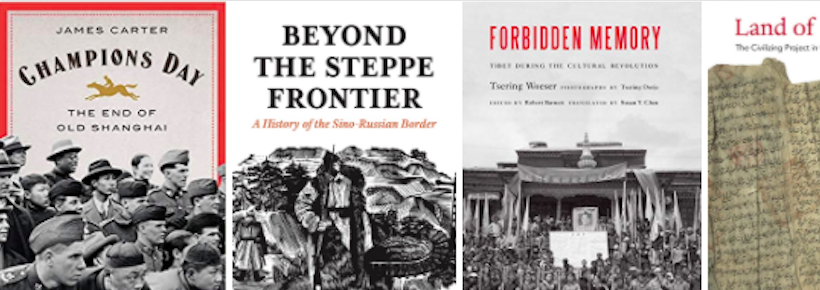
This is part two of a series we’re calling 2020 China Books, showcasing new or forthcoming books about China’s past and giving their authors an opportunity to suggest why readers might be interested in them at this current historic moment. Part one was themed around China and the World. The books in this second list (all blurbs written by the authors) are emblematic of two enduring themes in literature about Chinese history: a fascination with Shanghai – the “Paris of the East” – and a desire to understand China at its fringes. Both subjects are appealing in their apparent exceptionalism. Shanghai’s unique cosmopolitanism and energy have fascinated writers and travelers for more than a century. Meanwhile the people living in borderland regions like Tibet, Xinjiang and Manchuria have their own rich and complex histories. By placing these exceptional and peripheral regions and the experiences of China’s minorities at the center of their writing, the authors below do the important work of providing a more capacious understanding of what constitutes China’s history.

Barbarians at the Gate

Neither Boxers Nor A Rebellion

A discussion of the Boxer Rebellion, with guest Jeffrey Wasserstrom

An episode of Barbarians at the Gate

In this episode, Jeremiah and David welcome historian Jeffrey Wasserstrom to the show. Jeff is Chancellor's Professor of History at UC Irvine (and founder of the China Channel), and is not only a prolific academic scholar but also one of the most sought after China analysts appearing on mainstream news media outlets such as BBC and NPR. His most recent book, Vigil: Hong Kong on the Brink, documents the recent political unrest in Hong Kong, putting the movement into historical context. On the show, Jeremiah and David delve into Jeff’s current project, a historical  reevaluation of the Boxer War of 1899-1901. The conversation draws parallels between the xenophobia and anti-foreign sentiment in China during the Boxer incident and the nationalistic and racial divisions between China and the West engendered by the coronavirus crisis:

Fiction, Translation

Headscarf Girl

New fiction by Cao Kou – translated by Josh Stenberg

Cao Kou’s short fiction often masquerades as the casual recollection or chatty anecdote of a youngish male first-person narrator. People who have lived in Chinese cities will recognize this streetscape, with its gritty locales and paucity of private space. Non-Han Muslims are a visible part of that landscape, especially in eateries like the one where this Han narrator has started taking meals. The protagonist is attracted to the “headscarf girl,” but he combines this with an incuriosity so fundamental that he likely doesn’t know her name; her vanishing at the end earns only a shrug. This brief anti-romantic tale speaks volumes about the realities and anxiety of the intersections of gender, ethnicity and religion in the contemporary Chinese metropolis, and it is likely this unease which had led to it being published here for the first time, rather than in China. – Josh Stenberg


I’m not even exaggerating when I say that I’ve eaten at all the places to eat near where I live. And there’s one or two where I’ve eaten lots of times, so there’s an owner and a waitress, both women, that I’ve gotten to know.

Barbarians at the Gate

The Common Tongue

How putonghua, standard spoken Chinese, remains controversial

An episode of Barbarians at the Gate

In this episode, Jeremiah Jenne and David Moser examine putonghua, the spoken Chinese language most people refer to as Mandarin. What is its history, and what does that say about competing national and regional identities in Chinese history? What’s the difference between a dialect and a language? And how do we differentiate between Mandarin in the Qing Dynasty, guoyu in the Republican Period, and putonghua in the PRC? The hosts discuss David’s research for his 2016 book A Billion Voices on the evolution of Putonghua in China, as well as the recent controversy over the app Douyin penalizing users who post videos in other Chinese languages, especially Cantonese. They also get an assist from Zhang Yajun, host of the Wo Men Podcast on Radii China, who talks with David about the differences between Beijing or Northern-Chinese “dialect” and "standard" putonghua. If you enjoy this, also listen to the recently released follow-up episode with guest Gina Anne Tam.

2020 China Books

2020 China Books (Part 1): China and the World

A list of new China history books, freshly relevant for our times – compiled by Brian Spivey

This is part one of a series we are calling ‘2020 China Books.’ The series showcases books about China’s past that came out, or are coming out, in 2020. We want to provide not just a more thorough accounting of the most up-to-date research and thinking about China’s past, but also to give authors an opportunity to suggest why readers might be interested in their book in this current historic moment. With that in mind, we gave authors who published or are publishing books in 2020 the same prompt:

“This is a difficult time for books about China's past to be coming out, due to the intense nature of the current news cycle. Can you think of any aspect of your book that might make it especially appropriate reading right now for one of two reasons. Either because of the light it sheds, either directly or indirectly, on a pressing issue of the moment? Or because it might offer a reader a complete diversion from thinking about contemporary crises?”

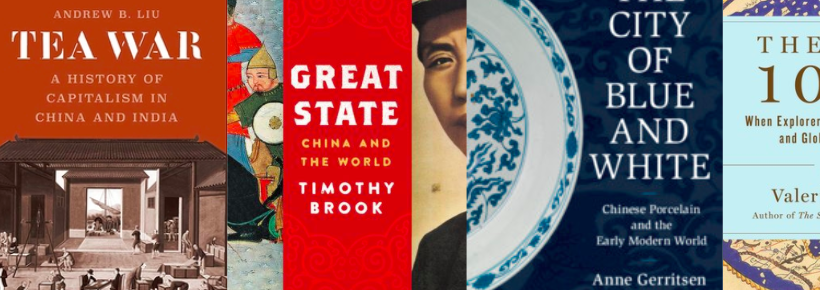
We received dozens of responses from a wide range of authors. As much as we could, we organized responses by theme. A benefit of compiling these responses has been to see more clearly the broad questions and frameworks animating historical work about China. China’s “rise” on the global stage has clearly stimulated many to think about how China and the Chinese people have related to the world throughout history. The ten books below are all loosely united around this theme of China and globalization. They show how China has changed and been changed by the world through a variety of registers: capitalism, commodities, global trade, ideology, human migration, art, and more. – Brian Spivey