Reviews

Hong Kong: Shock Therapy

Antony Dapiran reviews Aftershock: Essays from Hong Kong, edited by Holmes Chan


“Someone must have slandered Josef K., for one morning, without having done anything wrong, he was arrested.” – Frank Kafka, The Trial

Hong Kongers may feel they have good cause to invoke the name of Franz Kafka. They are becoming accustomed to the arbitrary exercise of state power in illogical and often absurd ways that would make even Kafka blush.

Since the imposition of the National Security Law on 30 June, Hong Kong has at times seemed to be descending inexorably into the Kafkaesque: teenagers arrested for their Facebook posts; people arrested for possessing wearing t-shirts or possessing flags that bear “illegal” slogans; police demanding that pro-democracy restaurants and stores tear down their Lennon Walls; songs banned in schools; Hong Kong police declaring that half a dozen people overseas are wanted under the new law (including activist Samuel Chu, a US citizen in the US apparently accused of the crime of lobbying his own government); Beijing’s leading official in Hong Kong warning that patriotism is “not a choice, but an obligation.”

Yet it is another aspect of Kafka that springs to mind on reading Aftershock: Essays from Hong Kong, a collection of essays reflecting on the events of 2019 by the city’s leading young journalists writing in English.
 

Excerpts

Deserts of Love

Long distance relationships in the Spanish Sahara – Sanmao, trans. Mike Fu

Excerpted from Stories of the Sahara

A tiny little grocery store opened up near our home about seven or eight months ago. With almost anything you could imagine available to purchase, life suddenly became much more convenient for us residents living some distance from town. No longer did I need to make a long journey under the blazing sun with my bags large and small.

I’d go to this store maybe four or five times a day. Sometimes in the middle of cooking I’d rush out to buy sugar or flour, always as a matter of utmost urgency, only to find that all my neighbours were in there shopping or the store didn’t have any change. No matter what, whenever I went, I couldn’t get in and out in ten seconds like I wanted. It wasn’t great for someone as impatient as me.


Reviews

Sanmao’s Shifting Sands

Lavinia Liang reviews Stories of the Sahara by Sanmao, trans. Mike Fu

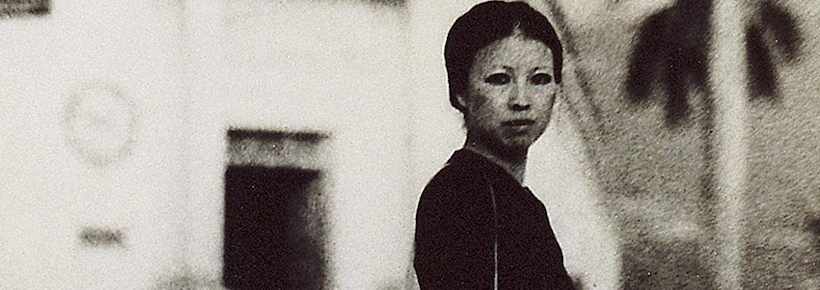
Sanmao has been experiencing a renewal. Not the Sanmao of the famed 1935 Chinese comics – the Shanghai street orphan so malnourished that he has only three hairs (san mao) on his head, or perhaps only thirty cents (san mao) to his name – but Sanmao, the pen name of Chinese writer Chen Maoping. Known as Echo Chan in the West, and “Taiwan’s wandering writer” to others, author and cultural icon Chen was vastly popular in the Chinese-speaking world during the 70s and 80s. Yet not one of her books was translated into English until recently. Last year, she was honored with an ‘Overlooked No More’ obituary in The New York Times, a Google Doodle, and, in January 2020, the release of the English edition of the 1976 book that skyrocketed her to celebrity, Stories of the Sahara, translated by Mike Fu.

Sanmao was born in Chongqing to a well-off family that then departed to Taiwan due to the Communist victory over the Nationalists in 1949. She struggled in junior high and eventually stopped attending school, after which her father, a lawyer, hired private tutors for her. In her college years, Sanmao began traveling widely – first to Spain, where she met the young José María Quero y Ruíz, whom she would eventually marry – and later to both Germany and the United States. She became fluent in Spanish, German and English, all during a time when few Chinese women traveled the world – indeed, a time when Taiwan was still under the rule of martial law.


Translated Chinese Fiction

San Mao’s translator on Stories of the Sahara

An episode of the Translated Chinese Fiction Podcast

"Don't ask from where I have come. My home is far, far away."

In this episode of the Translated Chinese Fiction Podcast, host Angus Stewart talks to Mike Fu about Mike’s translation of Sanmao's Stories of the Sahara (撒哈拉的故事 Sǎhālā de Gùshì). Sanmao (三毛), the pen name of Echo Chan, is a literary hero in China and Taiwan, best known for the time she spent in the Sahara, writing in a lucid, arresting and playful style about her life there. She passed away in 1991 but she is very much alive on the page, and has recently become better known in the rest of the world. This post is the last of our syndication run of the podcast – which has included episodes on Nobel-winning novelist Mo Yan, martial arts maestro Jin Yong and sci-fi fantabulist Chen Qiufan.


Reviews

The Tibetan Genocide (Part II)

HT on Tibet’s Chinese revolution, 1949-1976

Ed: Don’t miss part one of this series of reviews on Tibet’s experiences in the Mao era, part of a fortnight at the China Channel reminding readers of the horrors that Tibet underwent during the Chinese and Cultural Revolutions. Last week Robert Barnett and Susan Chen talked to Tsering Woeser, who also presented a number of her father Tsering Dorje’s photographs from the era.

Tibet in Agony: Lhasa 1959
Li Jianglin (2016, orig. 1959 Lasa!, 2010)

Li Jianglin is the daughter of CCP officials. She moved to New York in the 1980s, became a librarian, got to know some Tibetan people in Queens, and eventually set out to write a book about what happened in Lhasa in 1959. Unlike Benno Weiner, Li Jianglin has no time for United Front dialectics – her book is an open polemic. She tells us: "This book will document and show that Mao had active plans from very early on to impose his policies throughout Tibet despite the promises of the 'Seventeen-Point Agreement' [that guaranteed Tibetan self-rule within the PRC], even though he was aware that this would entail bloodshed. His explicitly stated view was that he welcomed Tibetan unrest and rebellion – and even hoped it would increase in scale – as it would provide him with an opportunity to 'pacify' the region with his armies." Li Jianglin has a librarian's command of Chinese-language sources. To cut through the tangle of conflicting claims about what took place, she reads from official histories, classified CCP communications, PLA memoirs, propaganda pronouncements, plus a host of published memoirs by Tibetans in exile, and supplements the story with interviews of survivors.